Heavy rainfall overwhelmed Russia's southernmost republic. 327,000 without power. A railway bridge collapsed. The forecast says it isn't over.
Dagestan sits at the edge of the known world — Russia's southernmost republic, wedged between the Greater Caucasus mountains and the western shore of the Caspian Sea.
Over 1,800 rivers cut through its rugged interior, draining from highland peaks down through deep canyons toward the lowland coast. Makhachkala, the capital, sits right where the mountains meet the sea.
When the mountains get heavy rain, everything flows downhill — fast — toward the cities at their feet.

The rain began and didn't stop. Authorities in Makhachkala had been preparing for bad weather. What arrived was something else entirely.
The Makhachkala city administration declared a state of emergency on Saturday morning. Emergency services were placed on high alert. Efforts to deal with the aftermath began immediately.
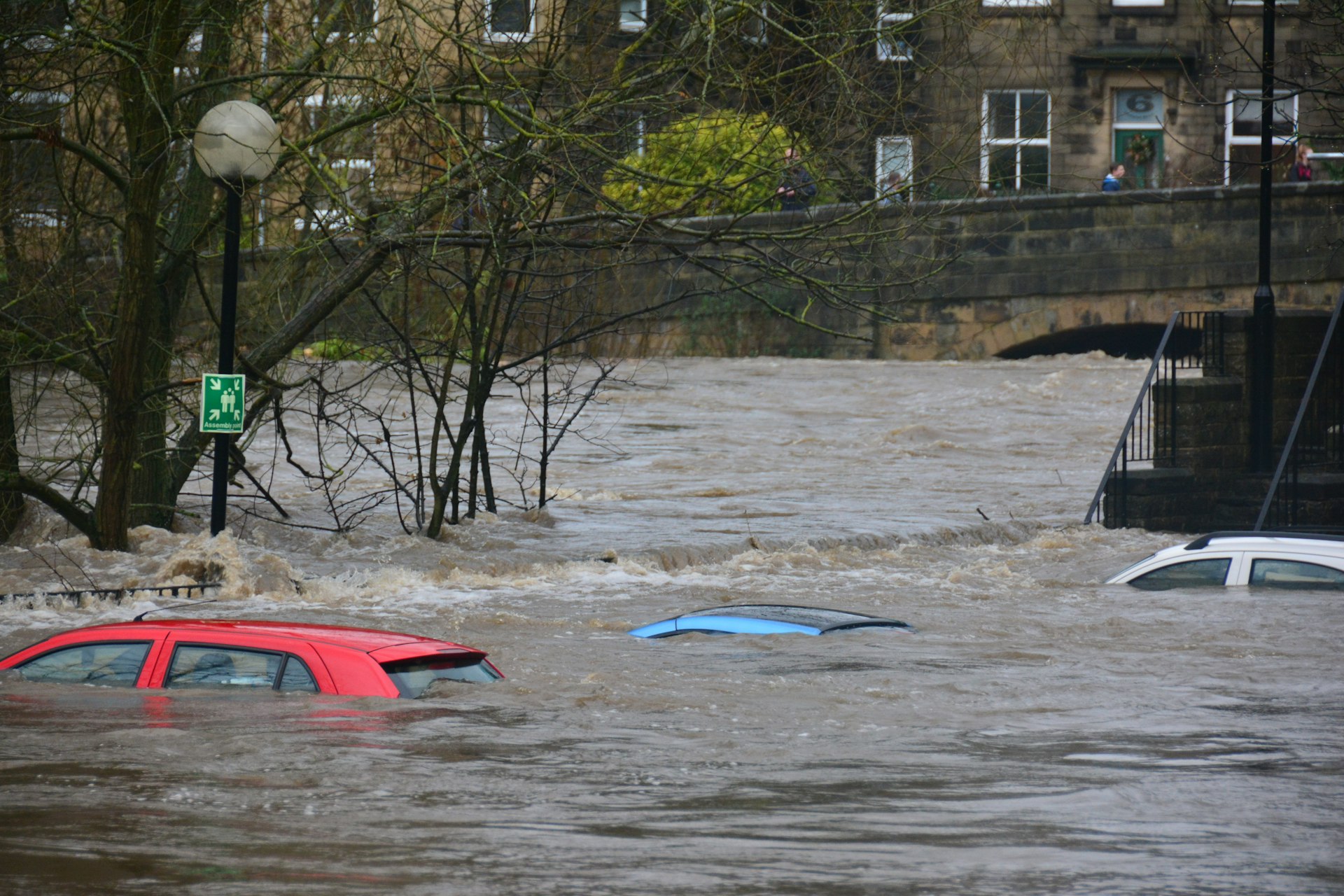
Footage from the capital showed floodwaters tearing through streets, submerging vehicles, washing away everything not bolted to the ground. In Makhachkala alone, at least 20 private houses were flooded and the banks of two rivers were washed away.
By noon Moscow time — 9:00 AM GMT — the regional ministry of emergency situations confirmed the figures. Nearly 300 settlements plunged into darkness. More than a quarter of a million adults and nearly 90,000 children left without electricity.
The rain is forecast to continue until Sunday.
In Khasavyurt — Dagestan's second-largest city — the damage went structural. A railway bridge on the North Caucasus Railway gave way under the force of the floodwaters.
The North Caucasus Railway is a critical artery connecting Dagestan to the rest of southern Russia. Its disruption severs one of the region's primary freight and transit links at exactly the moment when emergency supplies need to move.
Emergency specialists from Russia's Ministry of Emergency Situations deployed across Makhachkala, evacuating residents from flooded districts by boat. The Telegram channels of local officials became command centers — real-time updates on which neighborhoods to abandon, which roads remained passable.
"Assistance will be provided to affected residents," the city administration said. But with the rain continuing and the power still out in 283 settlements, the scope of that assistance remains unclear.
Powerful streams of water were reported carrying away cars. Residential houses that survived decades in the Caucasus foothills were swallowed in hours.
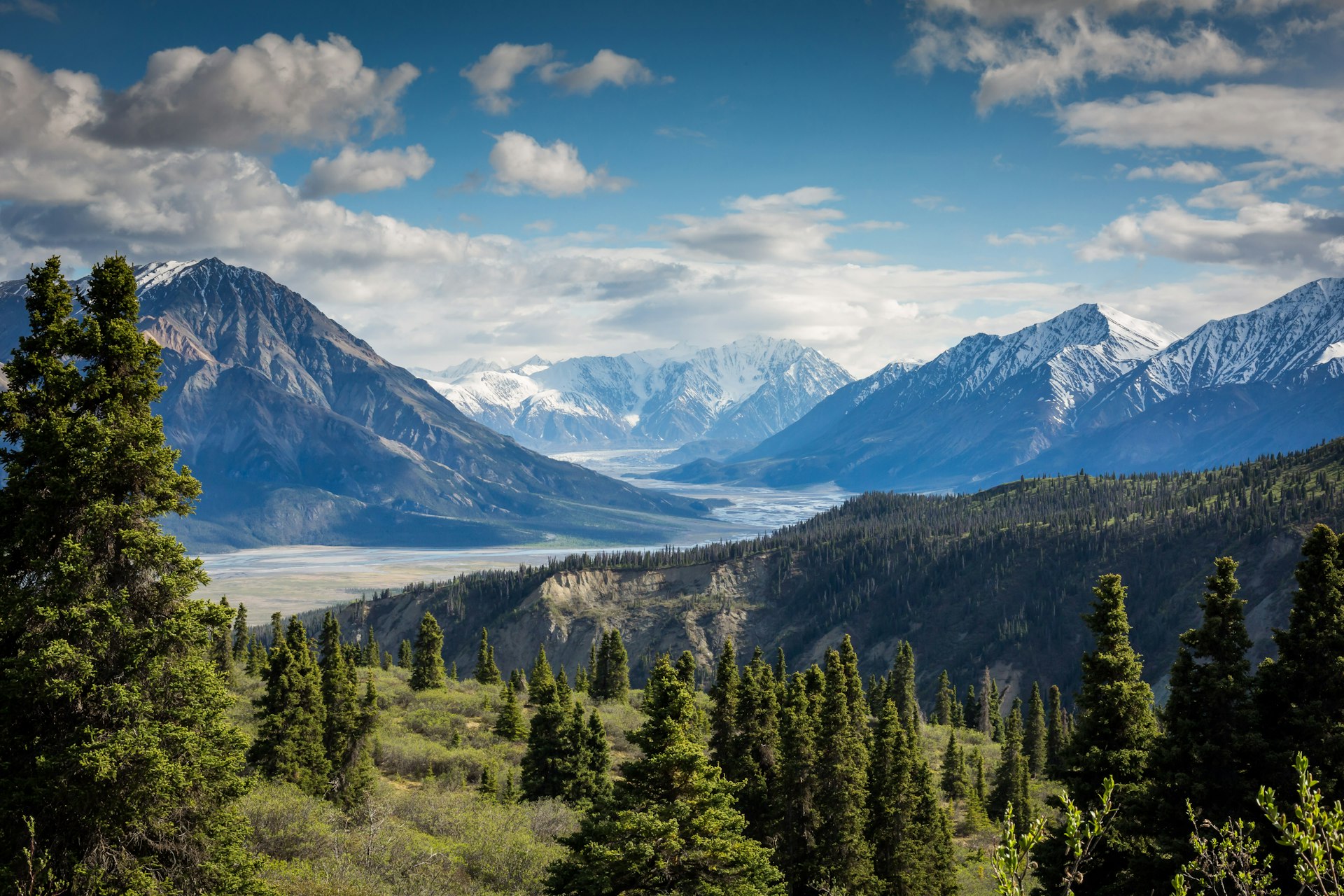
Dagestan's geography is a funnel. The Greater Caucasus — Europe's highest mountain range — captures moisture from the Caspian and channels it through a network of steep, narrow valleys. The rivers are rapid. The canyons are deep. When it rains hard, the water has nowhere to go but down, fast, toward the populated lowlands.
The Andysky-Salatau and Gimrinsky ranges enclose a triangle of extremely rugged terrain known as the Dagestan Interior Highland. It's dramatic country in good weather. In bad weather, it becomes a machine for producing flash floods.
Normally, the northeastern Caucasus is among the driest parts of the range — as little as 250mm of annual precipitation. When that pattern breaks, the land has no memory of how to absorb it.
Forecasters say the heavy rain will continue through Sunday. For the 327,000 people already without power — the children, the elderly, the families on upper floors watching the water rise — there is no timeline for relief.
The railway bridge is down. The rivers are still running high. And the mountains keep emptying.
Source → Reuters, March 28, 2026